How to Get Van Halen’s Tone at Bedroom Volume
June 24, 2026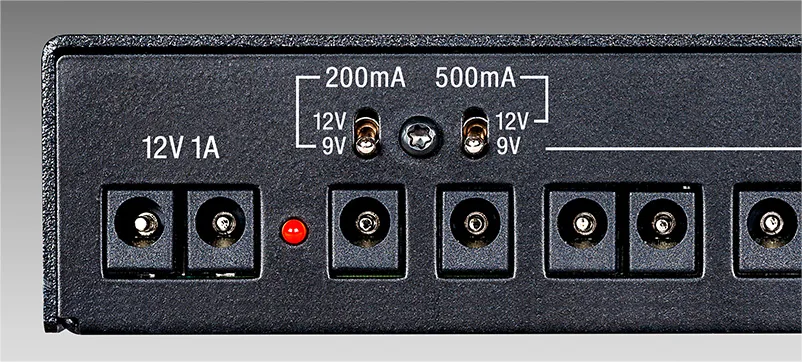
The Complete Guide to Powering Your Pedalboard
How to run vintage analog and high-current DSP effects cleanly.
A noisy, glitchy, unpredictable pedalboard is possibly the biggest buzzkill a guitarist can experience. Yet, many players still spend hours chasing hum, staring at digital pedals that randomly reboot, or wondering why their favorite analog overdrive starts sounding weird. Patch cables or a space’s wiring often get the blame. While those things matter, the most common source of noise and instability is your pedalboard power supply.
If your power source isn’t engineered to support both low-current analog circuits and modern high-current DSP effects, your rig can’t perform at its best. Boutique pedals, premium cables, careful routing — all for naught without clean, isolated power.
This article cuts through the myths around pedalboard noise and shows you how to build a stable, quiet board. You’ll learn what modern pedals actually require, how to avoid common power mistakes, and how to choose the right isolated pedalboard power supply.
Pedalboards Have Evolved, Your Power Needs to Keep Up
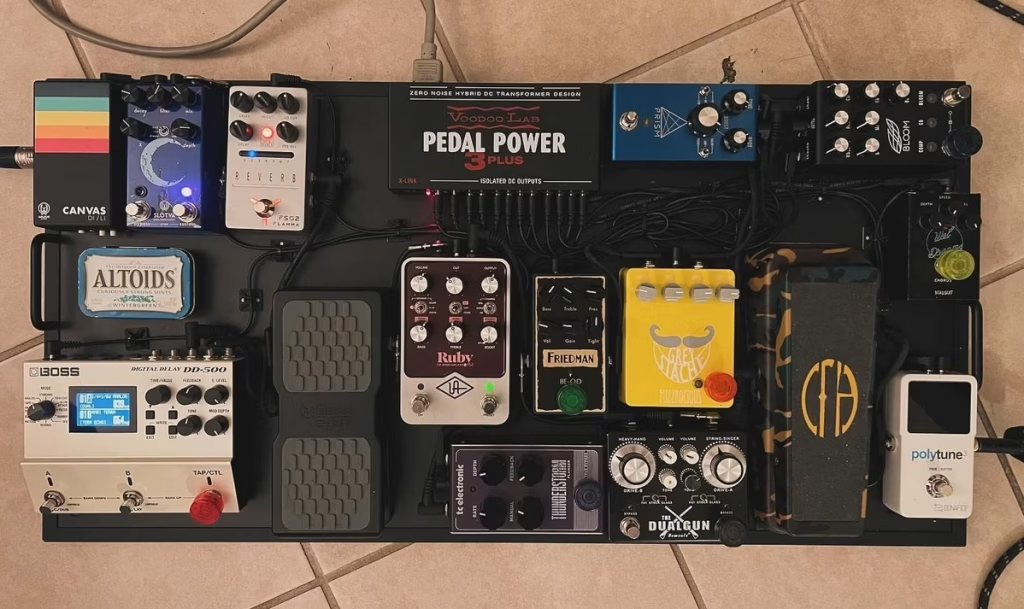
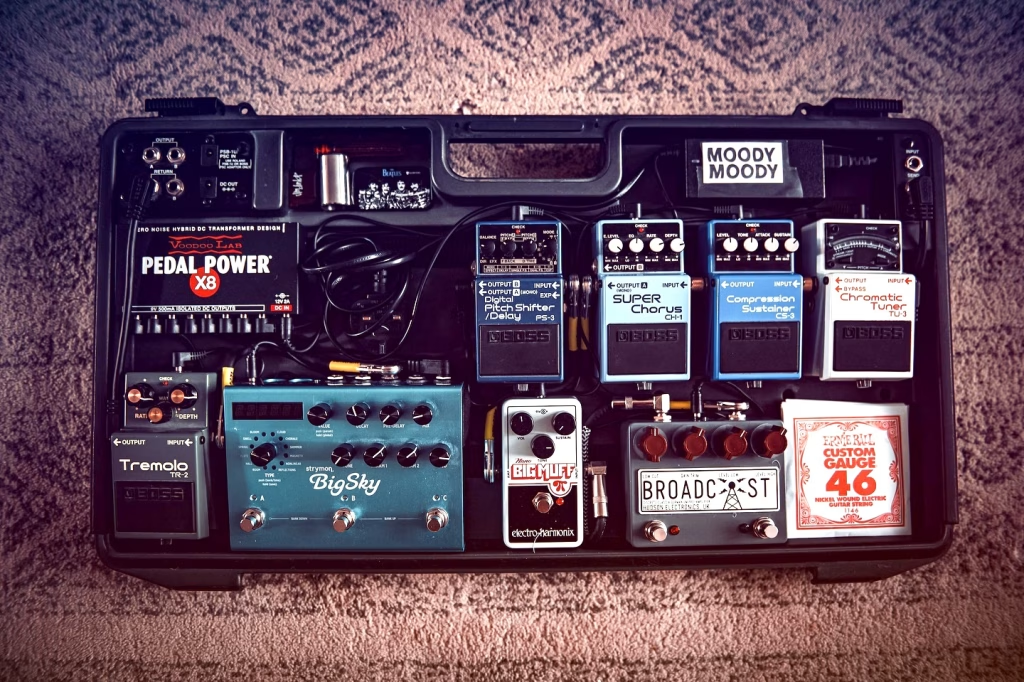
What used to be a simple row of battery-powered analog pedals has turned into a veritable smorgasbord of vintage circuits, high-powered DSP effects, amp emulators, wireless units, MIDI controllers, and switching systems. This shift hasn’t just changed tones — it’s reshaped what your power supply needs to deliver.
Modern Pedals Demand More
If your last pedalboard was built during the “all-analog” era, the power requirements of today’s pedals might be surprising. Vintage stompboxes typically draw just a few milliamps, but modern DSP pedals rely on processors, memory, converters, and regulation circuitry that use more current — often 250–500mA for a single pedal.
These modern pedals don’t just gobble current — they can also be noisy neighbors — dumping switching noise back into the line and being finicky about voltage fluctuations, especially at startup. This is when isolated power is no longer a nice-to have.
The Basics for your Board: Voltage, Current, and Polarity
There are only three things that really matter when it comes to factoring in your power needs:
Voltage (V)
This one’s fairly non-negotiable. It’s important to match the pedal exactly. Most run at 9V, some at 12V or 18V. Use the wrong voltage and you risk bad performance, or in extreme cases, possibly damaging your pedal.
Current (mA)
How much power a pedal draws. Your power supply must deliver at least that amount. More is fine. Less triggers noise, glitches, or sketchy startup.
Polarity
Most pedals are center-negative, but some vintage-style circuits and certain modelers flip the script. This is the “silent killer.” Plugging a center-positive supply into a center-negative pedal can fry the circuit instantly. Always check the diagram on the pedal’s power jack before you plug in.
The Daisy Chain Trap
On paper, daisy chains are the ultimate convenience. One cheap cable, one AC outlet, and power for your whole board. What could go wrong?
In a word, everything.
Daisy chains force every pedal in your rig to share a single electrical path. That means they share the same ground and the same noise floor. When you add a modern digital pedal into that shared loop, it starts talking back into the power line. Without isolation, your overdrive pedals hear that digital chatter.
If you’re hearing these, your power is likely shared:
- Digital Whine: That high-pitched whistle that changes when you tweak a delay setting.
- The Tick: A rhythmic clicking that syncs up with your tremolo or tap-tempo LED.
- Mystery Hum: Classic ground loop hum that gets louder as you click on more
These annoyances aren’t “ghosts in the machine,” they’re the result of pedals interacting electrically when they should be kept separate. For a three-pedal board, a daisy chain will probably get you through the gig. For a modern board? It’s a recipe for a noisy disaster.
Isolated Power to the Rescue
True isolation effectively gives every pedal on your board its own dedicated power source. By electrically decoupling each output, you create a firewall that stops noise from jumping from one pedal to the next. Your analog drives stay pure, your digital processors stay stable, and your switching system won’t throw a fit when the stage lights kick on.
Beyond just separating your pedals, Voodoo Lab pedalboard power supplies are engineered to filter out the chaos coming from the wall. They reject AC line noise and voltage spikes before they ever reach your signal chain. This front-end regulation is what keeps your board dead-quiet, whether you’re plugged into a properly grounded studio outlet or a gas generator at an outdoor festival.
It’s why properly engineered Voodoo Lab power supplies remain the standard on touring rigs for Smashing Pumpkins, Deftones, Iron Maiden, and hundreds more.
How to Choose the Right Pedalboard Power Supply
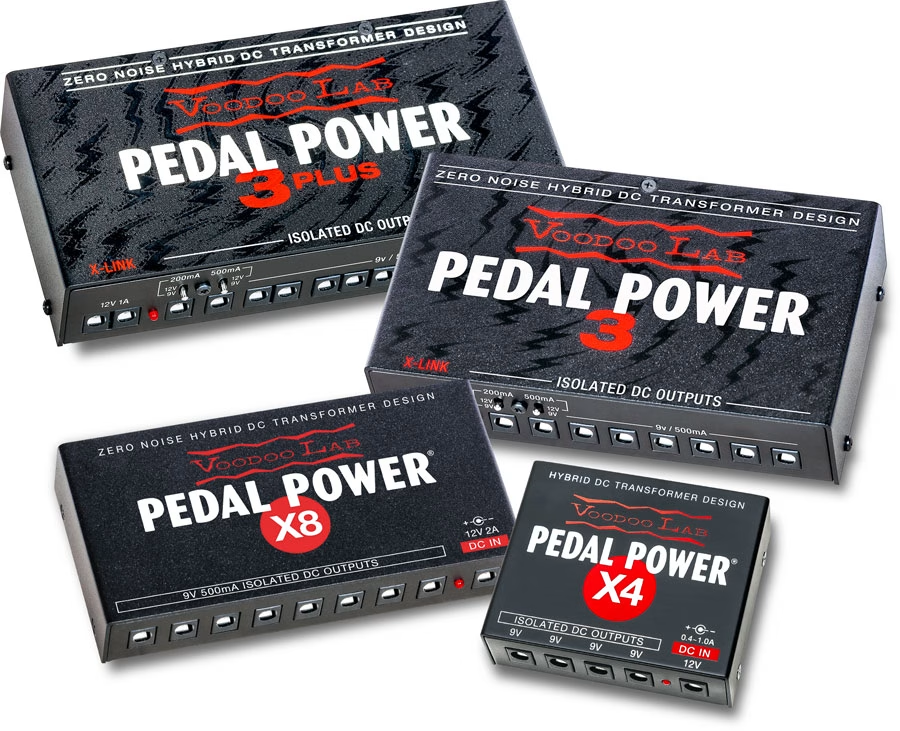
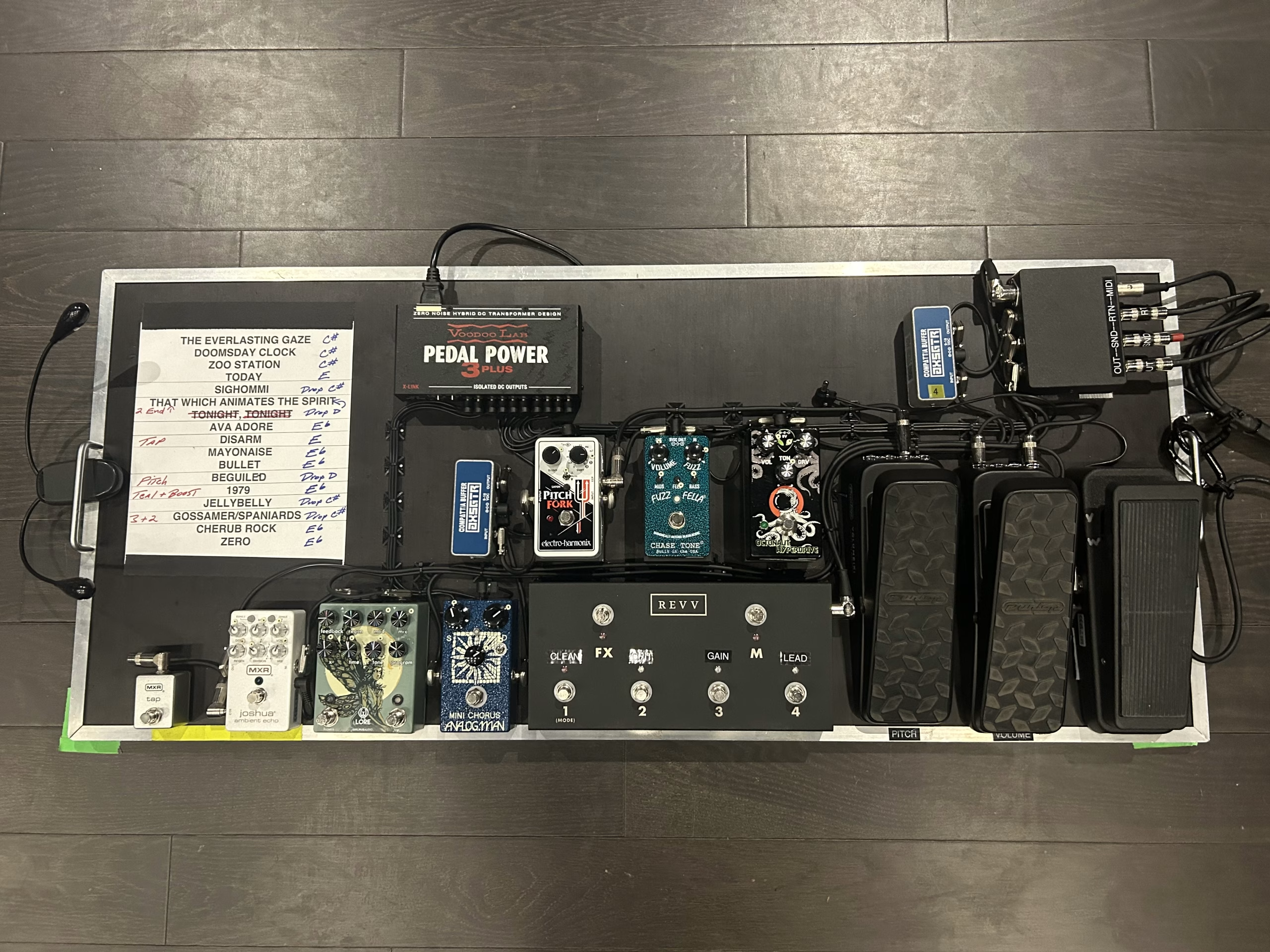
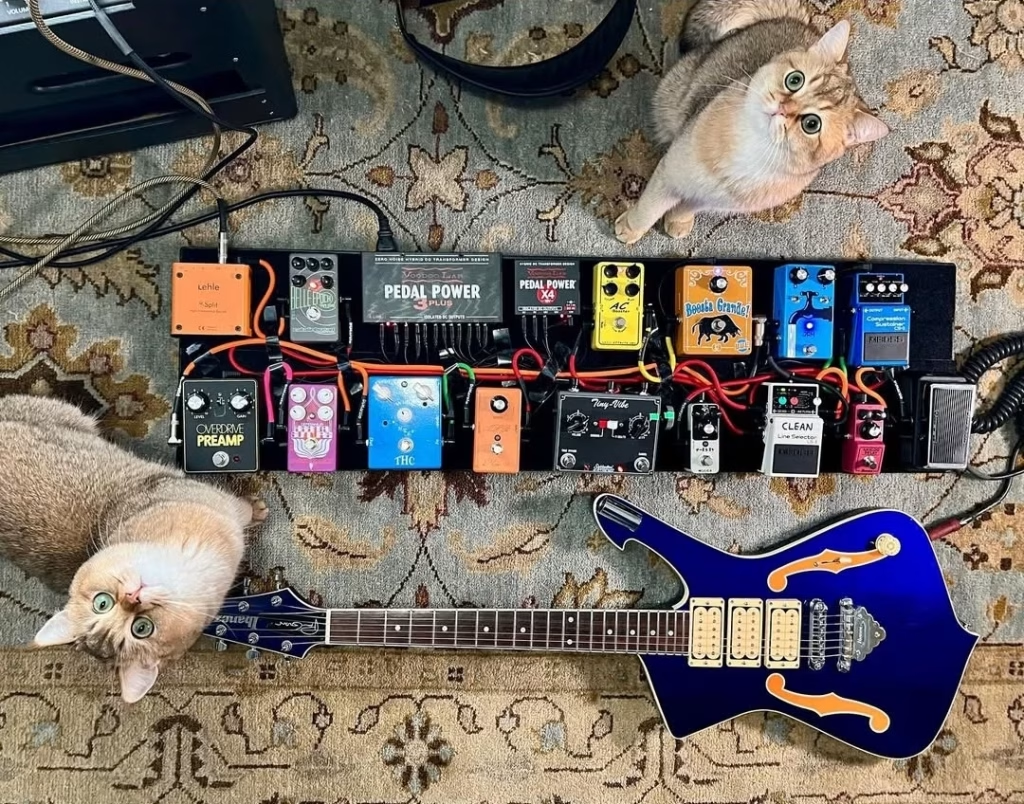
For mostly analog boards, an X4 or 2 Plus might be perfect. With mixed analog/digital setups, Pedal Power 3 gives you isolation and room to grow. Digital-heavy rigs running big reverbs, delays, amp sims, and MIDI — Pedal Power 3 Plus or a 3 Plus and X8 combination ensures every pedal gets what it needs.
Ultimately, your pedalboard power supply should leave some room to grow with enough outputs.
A Simple Guide:
Small Board: 2-4 analog/DSP effects: Pedal Power X4
Medium Board: 5-8 analog effects: Pedal Power 2 PLUS, 5-8 analog/DSP effects: Pedal Power 3 or X8
Large Board: 9-12 analog/DSP effects: Pedal Power 3 PLUS
Huge Board: 12+ analog/DSP effects: Pedal Power 3 PLUS expanded with X4 or X8
Your Power Supply: The Foundation of your Tone
Voltage, current, polarity, and true isolation decide whether your board is an ally in your musical exploits or an enemy. With the correct power, every pedal performs as designed, no matter the venue, temperature, or electrical chaos around you.
—Darrin Fox